

This Christmas will mark 50 years since Cyclone Tracy hit Darwin in the early hours of Christmas Day 1974, killing 66 people and devastating 80% of the city (reference: Cyclone Tracy | National Museum of Australia).
This webinar will commemorate Cyclone Tracy and reflect on how this event impacted the Darwin community and shaped the Australian emergency management sector – including our approaches to disaster response, relief, and recovery. Our presenters will share their stories and experiences and those of their organisations.
Lessons learned from the impacts of Cyclone Tracy continue to inform disaster resilience priorities across Australia including improved building codes, coordination of community and NGO support, to how we understand the psychological impacts of disaster experiences.
Join us to hear how Cyclone Tracy forever changed emergency management and humanitarian assistance practices at the local, state and national levels.
There will be an opportunity for Q&A.
Guest Speakers:
 Richard Creswick
Chair, Remembering Cyclone Tracy inc.
Richard is a retired journalist. He arrived in Darwin in February 1972 for the start of state-type television news bulletins on the new ABC TV service. He produced the last TV news bulletin before Cyclone Tracy hit at Christmas, 1974.
He was the first Public Relations Officer for the new NT Electricity Commission in 1978. He worked in the media units of both federal and NT Labor governments and was both an ABC news bulletin producer on the international service ATV and a researcher and cataloguer in the ABC Archives. Richard has an interest in public education and has served as president of both the NT and national public school parents associations. This year, with local author and historian Derek Pugh, he co-authored a book of stories of Cyclone Tracy survivors. He holds the world record for a Barramundi caught on 6kg line.
 Andrew Coghlan
Head of Humanitarian Diplomacy, Emergency Services, Australian Red Cross
Andrew brings over 20 years experience in the emergency management sector. His current role is as Head of Humanitarian Diplomacy, Emergency Services with Australian Red Cross, overseeing the national Emergency Services function. Andrew has played a pivotal role in coordinating the Red Cross response to a number of major emergencies and disasters, including Cyclone Larry (2006), the Black Saturday Victorian Bushfires (2009) and Queensland Floods and Cyclone Yasi (2011).
Prior to joining Red Cross, Andrew was the National Recovery Consultant with Emergency Management Australia, providing advice to both state and federal governments following a range of emergencies and playing a key role in coordinating recovery assistance to Australians impacted by events such as the Boxing Day 2004 Indian Ocean Tsunami.
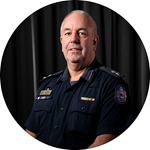 Ian Carlton
Manager, Southern Command at NTES
Chair of the NTES 50 Year Anniversary Celebration Committee
Mr Ian Carlton commenced with the Northern Territory Emergency Service (NTES) as acting Regional Manager in November 2020 and was appointed to the role in June 2021. During his time with the NTES he has been the acting Deputy Chief Officer on several occasions, as well as representing NTES on the AFAC Warnings Group and the Australian Tropical Cyclone Action Group (ACTAG). Mr Carlton was the Project lead for implementing the Australian Warning System (AWS) for NTES hazards of tropical cyclone, flood and storm, with a successful launch on 1 November 2023.
Prior to joining the Northern Territory Emergency Service, Ian served with the Victoria State Emergency Service and is an experienced Planning Officer, Operations Officer and Deputy Incident Controller. He has been deployed to many significant fire, flood, storm and landslip incidents, throughout Australia.
 Dr Margaret Moreton (Moderator)
Executive Director, Australian Institute for Disaster Resilience (AIDR)
Margaret is the Executive Director for AIDR and has significant experience working in the government, non-government, business and the philanthropy sectors. Her career began in federal government, before she undertook community-based research at the Australian National University that identified key factors that contribute to disaster recovery and resilience. Margaret has worked in paid and volunteer roles and has operated her own private consulting business in disaster risk reduction and resilience. Following the 2019-20 bushfires, she spent time working in philanthropy. Margaret has developed a strong reputation as a disaster resilience specialist, working to build community resilience in partnership with a broad range of stakeholders and led by communities themselves.
Together with her team at AIDR, Margaret is focussed on developing and sharing knowledge, resources, and experience across a range of sectors, to lead or contribute to efforts that enhance community and systemic resilience to natural hazards, across Australia. She has a passion for amplifying the voices of diverse groups who have lived experience and significant knowledge and expertise, and have previously been overlooked or not included ‘at the table’. She feels a sense of urgency about disaster risk reduction work, and strongly advocates for partnership approaches, on the basis that urgency, relationship and trust are essential elements of bringing about systemic change.