

Resilience Matters Webinar Series
The Resilience Matters webinar series will focus on systems, environments and human factors that intersect to influence the varying levels of risk, harm and equity that people experience before, during and after a disaster.
Presenters from a variety of research, government and community backgrounds will be invited to provide their insights and perspectives as we seek to understand how we can reduce harm in these systems to reduce disaster risk and build resilience.
Throughout the series, we will build on these foundational concepts. Everyone is welcome to attend, whether you are an experienced practitioner or new to these concepts, or somewhere in between.
Look out for new webinars as they are developed and added to the events calendar.
Webinar eight: Nature values and disaster risk reduction
Tuesday 9 June 2026
Natural values and biodiversity are increasingly at risk from extreme weather events. Conversely, nature‑based solutions are increasingly recognised for their role in reducing disaster risk and supporting climate adaptation. Yet for many communities, these approaches are not new- they are grounded in long‑standing, place‑based practices that work with natural systems rather than against them.
This webinar will explore the role of nature‑based solutions in disaster risk reduction, the importance of planning for natural values in response and recovery, drawing together evidence, policy insights and on‑the‑ground experience. The session will focus on the value of nature, the impacts of extreme weather on natural systems, and how nature‑based approaches can help reduce risk while delivering social, environmental and economic co‑benefits.
Speakers Dr Bek Christensen, Sarah Hoyal, and Wendy Telfer will share perspectives from across research, national policy and regional practice, with a strong emphasis on place‑based and people‑centred approaches. The discussion will highlight how natural values can be integrated into disaster risk reduction planning and delivery, and what this means for practitioners working across emergency management, land and water management, and climate adaptation.
This webinar will be of interest to practitioners, policymakers and decision‑makers seeking practical insights into applying nature‑based solutions in disaster risk reduction and incorporating natural values into their planning.
Presenters:
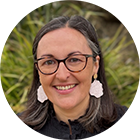
Dr Bek Christensen
Knowledge Broker, NRM Regions Australia
Bek has shaped her career around enabling impact from science, facilitating successful collaborations, and influencing change. She brings deep experience across the water, land management, and environment sectors, working across government, NGO, and university contexts.
She’s passionate about developing people, and building bridges between groups of people to enable collective impact for our planet and communities.
At NRM Regions Australia, her main focus is developing and sharing knowledge and capability to support the delivery of nature-based solutions for disaster risk reduction and climate adaptation. A key part of this is facilitating connections and a community of practice across the regional NRM organisations and partners to share evidence, knowledge, and best practices.
Alongside her work with NRM Regions Australia, she works as a leadership coach and facilitator for a range of clients in the water and environment sectors.
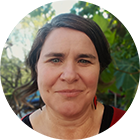
Sarah Hoyal
Nature-based Solutions Lead, NRM Regions Australia
Sarah is a passionate environmental and social science professional with over 20 years of experience leading the successful delivery of complex multi-stakeholder programs. In the NRM sector, Sarah has been a Board Director at Gulf Savannah NRM, and held leadership positions at NQ NRM Alliance and Cape York NRM. Before joining NRM Regions Australia, Sarah was the Biodiversity & Climate Executive Leader at Terrain NRM where she helped raise the profile of regional NRM organisations to an international audience.
Sarah has a Masters with Distinction in International Environmental and Urban Management from RMIT University and an Honours degree in Environmental Science from James Cook University. Her interests lie in finding effective, place-based and people-centred solutions to our biggest nature and climate issues.
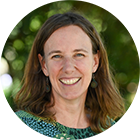
Dr Wendy Telfer
Nature Partnerships and Finance Lead, Hills and Fleurieu Landscape Board
Wendy leads the development of partnerships and sustainable finance to restore nature at scale in the Mount Lofty Ranges, South Australia.
Wendy coordinates two major programs: ReBird the Ranges, reversing woodland bird decline with an alliance of over 20 organisations; and Clean Rivers, restoring watercourse health with partners, landholders and First Nations.
With a career spanning ecological research, First Nations-led projects, and landscape and water planning, Wendy is passionate about bringing communities together to restore nature.
Hosts

John Richardson
Executive Director, Australian Institute for Disaster Resilience

Dr Mayeda Rashid
Manager Capability Development and Engagement
Australian Institute for Disaster Resilience