

Collective trauma events: What do we need to consider and plan for?
12.00pm-2.30pm, Tuesday 24 February 2026
There is no cost to participate
The sudden and significant loss of life and serious injury, whether from disasters or from acts of violence, can give rise to what sociologist Kai Erickson calls a collective trauma response that extends far beyond the immediate scene. Such events can be deeply disruptive to the fabric of communities, with impacts that reach well beyond the place and time of the incident.
Unlike many other disasters, sudden impact collective trauma events can fracture trust, identity and social cohesion, and often involve profound disruptions to people’s sense of safety, stability and wellbeing, with lasting psychosocial impacts.
Many events, including the recent tragic event at Bondi Beach in late 2025, the Hillcrest Jumping Castle tragedy, Bourke St Mall tragedy, have shown how quickly traumatic events can affect not only individuals, local communities, as well as the nation. The events can leave many questioning their sense of safety in everyday places, carrying collective grief and uncertainty, and raising complex questions for recovery planning, roles and responsibilities. These incidents can also be socially divisive, sometimes amplifying tensions, misinformation, scapegoating and hate incidents, which can further strain cohesion and complicate recovery.
To explore this complex and evolving topic, we are hosting an extended Possibility Lab session in February and warmly invite an expanded audience to join us. This session will provide space to reflect on what distinguishes sudden-impact collective trauma events, what this means for recovery planning and practice, and how systems and practitioners can better support communities—safely, inclusively, and over the long term.
Session format
This extended 2.5-hour session will be delivered in two parts:
- Part 1 - 12pm-1.30pm (90 minutes)
Presentations and a facilitated panel discussion to surface key insights, tensions, and emerging considerations - Part 2 - 1.30pm-2.30pm (60 minutes)
All participants are invited to stay for an interactive workshop with small group discussions to unpack practical implications and identify opportunities for action and learning
This extended Possibility Lab is intended to support shared learning across sectors and disciplines, and to strengthen our understanding of how recovery approaches may need to adapt in the context of collective grief and trauma.
We hope you can join us for this important conversation.
This special extended Possibility Lab is the result of collaboration between the Social Recovery Reference Group (SRRG), Australian Red Cross, and Australian Institute for Disaster Resilience (AIDR).
Presenters
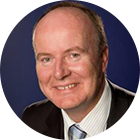 Andrew Coghlan
Head of Humanitarian Diplomacy, Emergency Services, Australian Red Cross
Andrew brings over 20 years experience in the emergency management sector. His current role is as Head of Humanitarian Diplomacy, Emergency Services with Australian Red Cross, overseeing the national Emergency Services function. Andrew has played a pivotal role in coordinating the Red Cross response to a number of major emergencies and disasters, including Cyclone Larry (2006), the Black Saturday Victorian Bushfires (2009) and Queensland Floods and Cyclone Yasi (2011).
Prior to joining Red Cross, Andrew was the National Recovery Consultant with Emergency Management Australia, providing advice to both state and federal governments following a range of emergencies and playing a key role in coordinating recovery assistance to Australians impacted by events such as the Boxing Day 2004 Indian Ocean Tsunami.
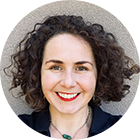 Dr Kate Brady
Senior Research Fellow, HowWeSurvive UNSW
Kate has had a distinguished career in disaster recovery operations, programming and research. Kate is the Senior Research Fellow for the UNSW How We Survive initiative, is an Honorary Academic Specialist at the University of Melbourne and is the Technical Adviser to Australian Red Cross Emergency Services, where she established and led the disaster recovery program for 12 years.
Most of Kate’s work focuses on what people find helpful and unhelpful after disasters. Throughout her career, Kate has had significant influence on State and National emergency management policy and has an international profile in collective trauma, resilience and in disaster recovery programming and policy. Kate is a co-author on the Australian Disaster Recovery Framework, the Australian Community Recovery Handbook and was an advisor in the development of the National Disaster Mental Health Framework. In 2021, she became the host for ABC’s podcast ‘After the Disaster’ and in 2025 was invited to do a TEDx talk.
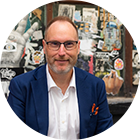 Dean Griggs
Palm Island Aboriginal Shire Council
Dean has worked for over twenty five years in local government across a variety of settings. His roles include General Manager (CEO) at Derwent Valley Council in Tasmania and executive roles at the City of Melbourne and the City of Darebin. Dean is currently engaged as an Executive Leading the Corporate, Community and Economic Development functions for Palm Island Aboriginal Shire Council. Dean has worked in government and stakeholder relations for national community resilience programs, with earlier roles in his career in the community mental health sector. To that end, Dean has a wide range of experience across multiple organisations and jurisdictions that inform his approach as an executive coach and strategic leader.
In his nine years leading municipal recovery at City of Melbourne Dean oversaw the recovery for the Docklands high rise apartment fire where over 400 residents were displaced for many months. Dean also led Council’s recovery efforts for Melbourne’s Bourke Street tragedy in 2017, and the recovery and public memorial project, following the death of Sisto Malaspina from Melbourne’s iconic Pellegrini’s Restaurant. In Tasmania Dean provided advisory support to the Hillcrest Tragedy Recovery efforts.
 Dr Malcolm Haddon PSM
Associate Director, Community Resilience, Multicultural NSW
Malcolm leads policies and programs that aim to inspire people to foster social cohesion, stand united against divisive forces, and come together in times of need. He is the chief architect of the flagship Community Partnership Action (COMPACT) Program, a state-wide program supporting an alliance of over 80 partner organisations who are committed to safeguarding social cohesion against hate and division. He also manages the NSW Community Resilience and Response Plan (COMPLAN), which details a coordinated, whole-of-government approach to identifying, assessing, and addressing risks to community harmony in NSW, including community harmony risks arising from an emergency or terrorist attack. Dr Haddon was awarded the Public Service Medal as part of the 2024 King’s Birthday Honours for outstanding public service in the promotion of multiculturalism, social cohesion and community harmony.

Ika Trijsburg
Director Urban Analytics, ANU Institute for Infrastructure in Society
Ika draws on diverse sector expertise to address complex challenges to democracy. She leads the Disinformation in the City project across five Australian universities, and was lead author of the world first Disinformation in the City Response Playbook in 2024.
Ika is Director of Urban Analytics at the ANU Institute for Infrastructure in Society in the Crawford School for Public Policy and Head of Democracy and Diplomacy at Municipal Association of Victoria. She also holds positions with the German Marshall Fund of the United States and the Initiative for Peacebuilding at the University of Melbourne. She has provided policy guidance to key actors globally including cities, national governments, G7 RRM, Council of Europe and UN-HABITAT.
Facilitators
Catherine Gearing
National Consultant Disaster Recovery, Social Recovery Reference Group
Catherine is National Consultant Disaster Recovery to the Social Recovery Reference Group. Catherine supports the organisations who are members of the Social Recovery Reference Group across Australia as they collaborate to continue to grow human and social recovery and preparedness capability. This group shares policy and practice and advocates for the centrality of both individuals and community to successful recovery.
Prior to this role Catherine worked with the NSW government in recovery and with the Red Cross in Australia and internationally working in preparedness and recovery roles. She is keen to bring together people who work with communities in recovery to learn and share experiences looking at enhancing strengths based and collaborative approaches.
Sally McKay
Guest Facilitator
Sally comes from a farming background in Southern Monaro NSW, just below the snow line in the high country.
Sally has worked across a diverse range of roles within Emergency Management for over 25 years. This has taken her to many places – primarily across Asia Pacific, working for the International Federation of Red Cross/Red Crescent, within Australia working for 3 levels of government and in New Zealand with the Civil Defense. Sally has been responsible for managing all aspects of recovery including social, infrastructure, economic, and the natural environment.
Sally is committed to social justice principles, while establishing programs which utilise a ‘strengths based’ and a ‘community centred’ recovery approach. She is looking forward to meeting you all!
 Peter Pigott
Guest Facilitator
Peter is an experienced host and facilitator with an interest in good participatory practice and the sort of engagement and collaboration that keeps the community (and those who make up that community) at the centre. Peter worked for many years as a Landcare facilitator before moving into the disaster recovery and resilience space. He is fascinated with the concept of resilience and how it can be applied to support healthy functioning communities and ecosystems. Peter is passionate about supporting people to see what they already have before they explore what they need next. As one of the original design team for the Possibility Lab, Peter has witnessed this network of recovery practitioners show up again and again for their communities. Peter brings a passion for building the capacity of communities of practice and exploring what becomes possible when people come together to learn, connect and support one another.
Moderator
- John Richardson, Executive Director, Australian Institute for Disaster Resilience