

Professional Development Program
Time and date
Friday 21 August 2026
9.00am (9.15am start) - 3.30pm
Registration open from 8.30am
Location
Melbourne Convention and Exhibition Centre
Cost
$350 + GST
Workshop | Unpacking disaster risk reduction: Building practical approaches to identify and reduce risks
About this workshop
Rather than a traditional 'teaching' session, this workshop is designed as a shared learning experience. Participants will bring their own knowledge, professional experience, lived experience and perspectives into the room. Building on discussions and reflections from across the conference, the workshop will create an opportunity to collectively unpack disaster risk, explore different ways of understanding it, and learn from one another.
Facilitated by the Australian Institute for Disaster Resilience (AIDR), with guest contributor Professor JC Gaillard (Ahorangi o te Matawhenua, Professor of Geography, Waipapa Taumata Rau/The University of Auckland), the workshop will explore core disaster risk reduction (DRR) concepts and introduce practical tools that can be applied across different contexts. Participants will work together to examine how hazards, exposure, vulnerability and capacity combine to shape risk, and how disasters emerge over time rather than in isolation.
The session will draw on Australian and international frameworks, including the National Disaster Risk Reduction Framework, and Action Plan, and explore how these can support practice. Participants will also use tools such as the Pressure and Release (PAR) model to unpack how risk is driven by underlying systems such as planning, governance, inequality and broader social and environmental factors.
Participants will leave with practical tools and approaches they have worked through during the workshop, insights gained from the experiences of others, and increased confidence to apply DRR thinking within their work, organisations and communities.
Delegates who attend this session will:
- explore how disaster risk is created through interconnected systems, drivers and conditions
- apply disaster risk reduction concepts and tools to analyse risk in real-world contexts
- reflect on how policy, practice and lived experience can inform disaster risk reduction
- identify practical opportunities to reduce risk and build resilience within their own work, organisations and communities
- Build connections and share perspectives through facilitated group work.
Who should attend?
Disaster risk reduction is everyone's responsibility. This workshop is for anyone who has a role in reducing risk, building resilience, or who wants to take action in their work or community. It is suited to those seeking to build, refresh or deepen their understanding of disaster risk reduction and its practical application.
Facilitators
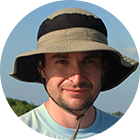
JC Gaillard
Ahorangi o te Matawhenua, Professor of Geography, Waipapa Taumata Rau/The University of Auckland
JC Gaillard is also a Research Fellow at the University of the Philippines Resilience Institute and sits on the Board of Directors of the NGO Center for Disaster Preparedness. JC trained as a geographer with particular interest in disaster studies and disaster risk reduction (DRR) in Asia and the Pacific. His current work centres on inclusion and power in DRR and disaster studies with a particular focus on cultural and gender minorities, children and people in detention. JC collaborates in participatory DRR trainings with local governments, NGOs and other civil society organisations. Learn more about JC' work at https://jcgaillard.wordpress.com.

Dr Mayeda Rashid
Manager Capability Development and Engagement
AIDR
Dr Mayeda Rashid is Manager, Capability Development and Engagement at AIDR and an Adjunct Research Associate at Monash University.
With a PhD and Master’s in disaster risk reduction, and over a decade of experience working across diverse cultural contexts, Mayeda brings both academic depth and practical insight to her work. She focuses on strengthening capability across the system by connecting research, policy, practice and lived experience.
As a facilitator, Mayeda takes a practical, inclusive and systems-based approach, supporting participants to explore how risk is created and what can be done about it. She values collaboration and leads with empathy and kindness, creating a supportive and respectful space where participants feel confident to contribute, challenge thinking, and learn from one another.
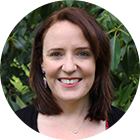
Lauren Lombardi
Manager Knowledge Management
AIDR
Lauren started her career in nursing and health literacy, later joining the Australian Red Cross where she spent over a decade in the National Emergency Services team. Throughout her time there, she gained experience in preparedness and operations, and eventually transitioned into strategic, monitoring, and evaluation roles.
Lauren now works in knowledge management at AIDR, supporting efforts to mobilise and apply knowledge for improved disaster risk reduction and resilience.
Host

John Richardson
Executive Director
AIDR
John has qualifications in geography, nursing and environmental science. He has worked in disaster management since 1997, in a range of roles including the State Recovery Manager for Victorian in the early 2000s, and more recently the National Resilience Advisor for the Australia Red Cross. He is also an Honorary Fellow of the University of Melbourne.
He has a keen interest and eye for patterns and connections in disasters, both at a practice and a policy level. He has strong interests in bereavement in the public realm and how music represents the disaster experience.